Mega auction, mini auction: the same league, two different games
26 October 2026
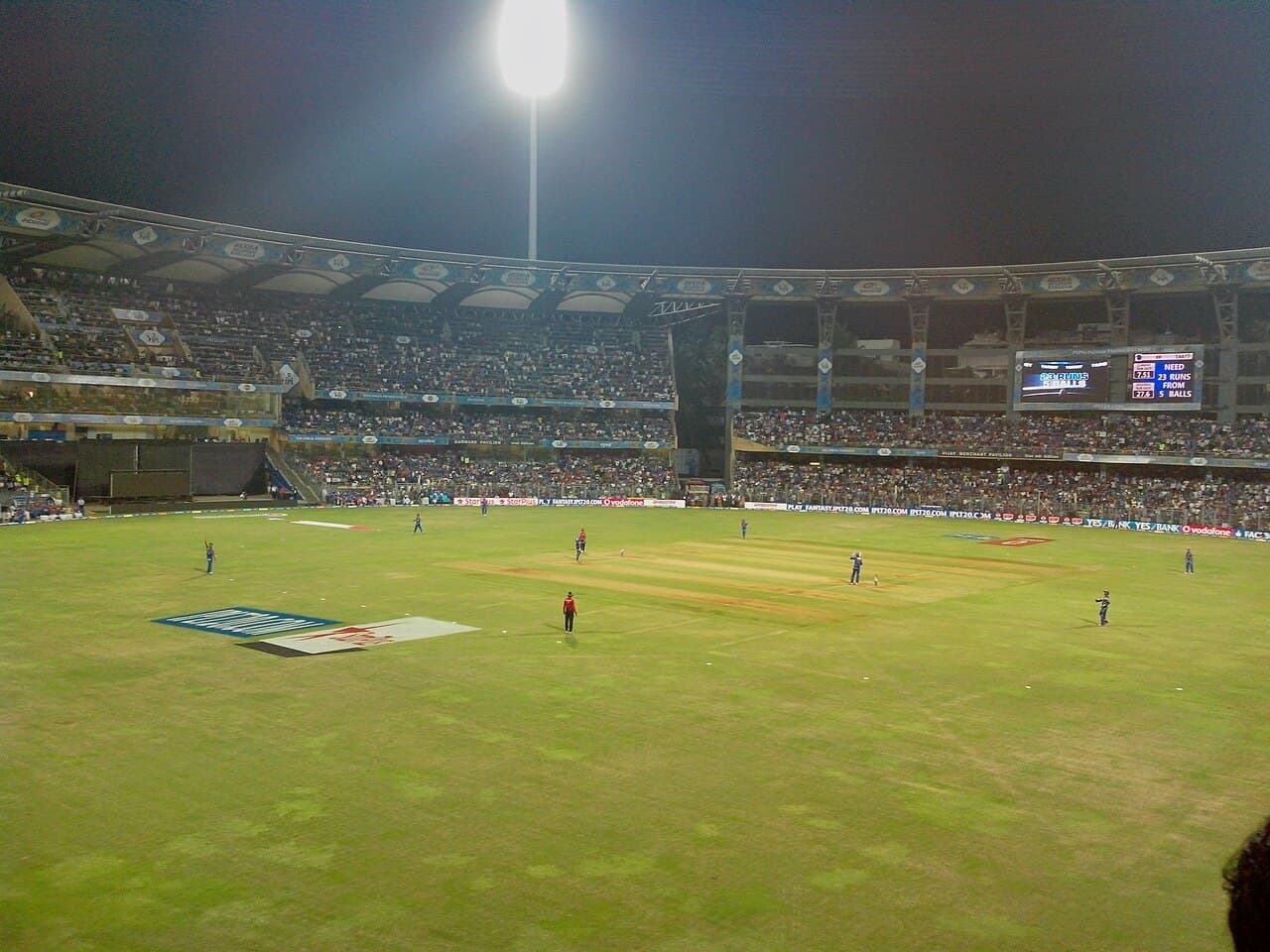
If you only watched the headlines, you could be forgiven for thinking the IPL auction is one event that happens every year at roughly the same scale. It is not. There are two different events that share a name. A mega auction rebuilds every squad from close to scratch. A mini auction is a top-up: the same squads, a few holes filled, a few players moved on. The 2025 auction was a mega auction and the 2026 one was a mini, and the difference between them is large enough that comparing their headline prices without saying which is which will mislead you.
This article sets the two formats side by side using CricOptics's own records of every IPL auction. It looks at how much was spent, how many players moved, how much of the league's total wage bill was decided at the auction itself and how much was decided before it, how differently the teams behaved, and what the trades that followed the 2026 auction tell us. All prices are nominal rupees, and nothing is adjusted for inflation. Where the data has a limit, the article says so.
Two kinds of auction
The league's mega auctions, as recorded in the data, are the ones in 2011, 2014, 2018, 2022 and 2025, plus the inaugural auction in 2008 that built the first squads. Everything else is a mini auction: 2009, 2010, 2012, 2013, 2015, 2016, 2017, 2019, 2020, 2021, 2023, 2024 and 2026.
The mega auctions are much bigger events. The 2011 auction bought 127 players for ₹293.0 crore. The 2014 auction bought 153 for ₹265.5 crore. The 2018 auction bought 169 for ₹431.7 crore, the 2022 auction 204 for ₹552.5 crore and the 2025 auction 180 for ₹636.9 crore. Over the same period the mini auctions of 2023, 2024 and 2026 bought 80, 72 and 77 players for ₹167.8 crore, ₹234.8 crore and ₹215.4 crore. So the most recent mega auction cost about three times as much as the most recent mini auction, and bought about two and a third times as many players.
That ratio of money to players is itself interesting. The 2025 mega auction averaged ₹3.54 crore per player bought and the 2026 mini averaged ₹2.80 crore. The mini auction spent a smaller total on a smaller group, but each player in that group was not cheaper by much, because the people who reach a mini auction are the ones teams have decided they still need, and they are bought one at a time against a few rival bidders.
The money you do not see at the auction
Here is the part that changes how you read the totals. The auction is only one of the ways a team commits money to a player. The other is keeping a player it already has. In the data, each auction window carries a list of players retained, which for the mega auctions is the short list a team may keep before the room opens, and for the mini auctions is effectively the whole squad carried over.
At the 2022 mega auction, teams retained 33 players, and those retentions came to ₹324.2 crore. At the 2025 mega auction they retained 46 players for ₹543.2 crore. Compare that with the mini auctions. At the 2023 auction teams kept 156 players on a combined ₹729.7 crore. At the 2024 auction it was 167 players and ₹714.6 crore. At the 2026 auction it was 168 players and ₹994.8 crore.
Add the two halves together and you get something close to the total money committed to players in that window, whether by auction or by carrying a contract over. In 2022 it was ₹324.2 crore retained plus ₹552.5 crore bought, or ₹876.7 crore. In 2023, ₹729.7 crore plus ₹167.8 crore, or ₹897.5 crore. In 2024, ₹714.6 crore plus ₹234.8 crore, or ₹949.4 crore. In 2025, ₹543.2 crore plus ₹636.9 crore, or ₹1,180.1 crore. In 2026, ₹994.8 crore plus ₹215.4 crore, or ₹1,210.2 crore.
Look at what share of each window's total was decided by auction bidding. In 2022 it was 63 per cent. In 2025 it was 54 per cent. In 2023, 2024 and 2026 it was 19 per cent, 25 per cent and 18 per cent. In other words, at a mini auction roughly four-fifths of the money a team has committed to its players was never bid on at that auction. It had been decided in earlier windows, by earlier auctions, or by a retention figure. The mini auction is not a small version of the big one. It is a small slice of a much bigger picture.
A caveat about this arithmetic is important. The retained figures for the mini auctions are not announcements the way a mega-auction retention list is. They are the salaries of the players a team kept into the season, taken from CricOptics's retention and squad records, and some are carried forward from the contract a player was already on. They are best read as the salary bill of the players kept, not as a list a team chose that week. The totals above are a reasonable guide to scale, not an accounting statement.
How differently teams behave
A mega auction pushes every team into the market at once, so teams look alike in the sense that they all spend. At the 2025 auction the ten teams spent between ₹40.7 crore and ₹110.2 crore. Punjab Kings spent the most, ₹110.2 crore on 23 players. Royal Challengers Bengaluru were second at ₹82.2 crore on 19, Delhi Capitals third at ₹72.8 crore on 19, then Lucknow Super Giants at ₹68.9 crore and Gujarat Titans at ₹68.8 crore. Mumbai Indians spent ₹44.5 crore, Sunrisers Hyderabad ₹44.8 crore, Kolkata Knight Riders ₹49.0 crore and Rajasthan Royals ₹40.7 crore. The gap between the biggest and smallest spender was about 2.7 to one.
At the 2026 mini auction the spread was wildly wider. Kolkata Knight Riders spent ₹63.9 crore on 13 players, including Cameron Green at ₹25.2 crore and Matheesha Pathirana at ₹18 crore. Chennai Super Kings spent ₹41.0 crore on nine, including two players at ₹14.2 crore each. Those two teams alone accounted for ₹104.9 crore, nearly half of the ₹215.4 crore spent in total. At the other end, Mumbai Indians spent ₹2.2 crore on five players, and Punjab Kings ₹8.0 crore on four. The gap between the biggest and smallest spender was about 29 to one.
The reason is not hard to see from the retention data. A team that kept a full squad has nothing to buy. Mumbai Indians carried 20 players on ₹122.2 crore into the 2026 auction, Gujarat Titans 20 on ₹112.1 crore and Punjab Kings 19 on ₹112.9 crore, and none of them needed much. Kolkata Knight Riders kept 12 on ₹54.7 crore and Chennai Super Kings 16 on ₹79.6 crore, which left both with the room and the need to spend. A mini auction's spending is a map of who had holes, not who has ambition.
What changes at the top of the list
The shape of the price list differs too. At the 2025 mega auction, 21 of 180 players went for ₹10 crore or more, and 41 for ₹5 crore or more. At the 2026 mini auction it was 5 of 77 at ₹10 crore or more, and 13 at ₹5 crore or more. In 2022, the earlier mega auction, 11 of 204 reached ₹10 crore.
The biggest price in each was close: ₹27 crore for Rishabh Pant in 2025 and ₹25.2 crore for Cameron Green in 2026. That is the headline people quote, and by that measure the two events look almost the same. By every other measure they are not. The median price was ₹1.5 crore in 2025 and ₹1.0 crore in 2026. The share of players bought for ₹1 crore or less was 43 per cent in 2025 and 53 per cent in 2026. And the concentration of money at the top was entirely different: the five most expensive players took 17.8 per cent of the 2025 total and 39.3 per cent of the 2026 total, while the top ten took 28.4 per cent and 58.0 per cent.
A mini auction is, in effect, a handful of expensive decisions and a lot of small ones. If two teams both want the one available star, the price goes up, and because there are so few other transactions that one price is a huge share of the total.
The trade window is part of the same story
The 2026 window also contains something you do not see in a mega auction: trades. The data records ten trades connected to it, with the amount each player was moved at.
The biggest was Sanju Samson, who moved from Rajasthan Royals to Chennai Super Kings at ₹18 crore. In the opposite direction, Ravindra Jadeja went from Chennai Super Kings to Rajasthan Royals at ₹14 crore, and Sam Curran also moved from Chennai to Rajasthan at ₹2.4 crore. Mohammed Shami went from Sunrisers Hyderabad to Lucknow Super Giants at ₹10 crore. Nitish Rana went from Rajasthan Royals to Delhi Capitals at ₹4.2 crore, and Donavon Ferreira moved the other way, Delhi Capitals to Rajasthan Royals, at ₹1 crore. Sherfane Rutherford went from Gujarat Titans to Mumbai Indians at ₹2.6 crore, Shardul Thakur from Lucknow Super Giants to Mumbai Indians at ₹2 crore, and two smaller moves, Arjun Tendulkar to Lucknow Super Giants and Mayank Markande to Mumbai Indians, were each at ₹0.3 crore.
Add those up and the ten trades moved ₹54.8 crore of player contracts. That is about a quarter of the ₹215.4 crore spent at the auction itself, and nobody bid for any of it. These were negotiated between teams and the figure attached to each is the player's contract, not a price discovered in a room. That is exactly why CricOptics keeps trades, retentions and releases in a separate ledger from auction bids and never adds them into auction spend. A trade is a salary agreed outside the auction, and mixing it with a bid would make the auction look bigger than it was.
It is also worth noticing how the largest of these trades balance. Between Rajasthan Royals and Chennai Super Kings, Samson went one way at ₹18 crore, and Jadeja and Curran went the other at ₹14 crore and ₹2.4 crore, a total of ₹16.4 crore. The two sides are close but not equal, and what each team did with the difference is not something the data can say, so this article does not guess.
Why the format matters for estimating a price
Everything above has a practical consequence for any attempt to say what a player will fetch.
At a mega auction, a large number of good players are in the room at once, so the price of any one of them depends on who else is available. At a mini auction, the pool is whoever a team decided to release or whoever is new, so one extra star changes the whole market. A model that treats a 2025 price and a 2026 price as the same kind of evidence will be wrong about both. This is why CricOptics's price check does not try to predict a mini-auction bid from a mega-auction pool. It ranks every active player by how they stand against the others and reads the price off what the real pay scale has paid at that rank over the last two seasons, mixing both formats and labelling that clearly.
It is also why the auction pages label every season as inaugural, mega or mini, and show retentions, trades and releases next to the bids and not inside them. If you are comparing two seasons, check the label first.
The limits of this analysis
A few honest limits. The data has no record of players who went unsold, so every average here is an average of players who found a buyer. Prices are nominal, so the 2011 and 2025 mega auctions are not directly comparable in real terms. The retention figures for mini auctions are salary bills of players kept, as explained above, and for some earlier years they are carried forward from the previous contract. The 2026 trades are recorded from published transaction lists and carry a single amount each, which is the figure the data attaches to the player, not necessarily a full account of what each team agreed. And a small number of sales across the IPL and WPL tables could not be matched to a player record and are counted in season totals but not in any player-level analysis.
Within those limits the picture is clear. A mega auction is an event where every squad is rebuilt and more than half of the money committed in that window is decided in a room. A mini auction is a smaller room where most of the money was decided before anyone arrived. The first has more players, more spending at every level, and a flatter distribution of who spends. The second has fewer players, a sharper concentration of the money in a handful of cheques, and a spread of team behaviour that mostly reflects who had holes to fill. When you see a record price next year, ask which of the two rooms it was set in, and you will know what to make of it.